For more than thirty years I have worked the corridor between the United States and China — two economies that together account for a decisive share of global output, and two systems that persistently misread each other. The headlines describe a relationship of confrontation. The capital flows describe something more durable: two markets that need what the other has, finding channels that work even when politics complicates the plumbing.
Capital follows capability, not headlines
The first lesson of three decades of cross-border work is that capital is unsentimental. American investors want growth exposure they cannot manufacture at home; Chinese companies want deep, liquid markets, global credibility and world-class governance discipline. Those needs do not disappear when relations cool. They reroute — through Hong Kong, through Singapore, through private structures rather than public listings — but the underlying gravity remains.
Investors who trade on the diplomatic weather tend to be whipsawed. Investors who underwrite the underlying capability — the factory, the technology, the distribution network, the management team — compound through the cycles.
Trust is the scarce commodity
In cross-border finance the scarce commodity is not capital. It is verified trust. Every successful transaction I have been part of rested on someone — an advisor, an anchor investor, an operator — who could vouch for both sides with firsthand knowledge and hold both sides to their commitments. Where that person exists, deals close. Where the parties rely on documents alone, deals close and then unravel.
The bridge between the two largest economies is not made of agreements. It is made of people who are trusted on both banks.
This is why the most valuable diligence is done in person, in language, over time. Financial statements answer what a company did. Only relationships answer what a company will do.
What each side persistently gets wrong
American acquirers and investors underestimate how much execution in China depends on local relationships and regulatory positioning, and overestimate how much a signed contract settles. Chinese companies entering the U.S. underestimate the litigation environment, the compliance burden and the scrutiny of public markets, and overestimate how much a strong product substitutes for distribution.
Both errors have the same root: assuming your home market’s operating logic travels with you. It does not. The professionals who add value in this corridor are bilingual in a deeper sense than language — they are bilingual in operating systems.
The next decade of the corridor
Whatever the political cycle produces, three structural facts hold. First, China remains the world’s largest manufacturing base and second-largest consumer market; global portfolios cannot ignore it indefinitely. Second, American capital markets remain the deepest and most trusted in the world; ambitious companies everywhere still want access to them. Third, the demographic and technological complementarities between the two economies are growing, not shrinking.
The channels will keep evolving — more private capital, more regional intermediation, more structure. But the corridor itself is permanent, and the professionals who can carry trust across it will remain the scarcest asset in global finance.
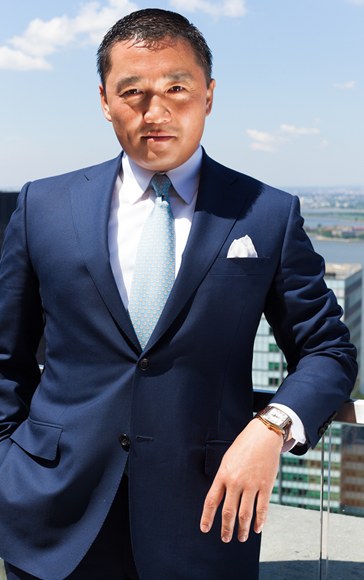
American financier and CEO of New York Global Group, bridging U.S. and Chinese capital markets for more than three decades. Full bio